How to Choose a UI UX Design Agency in the UK: The Complete 2026 Guide
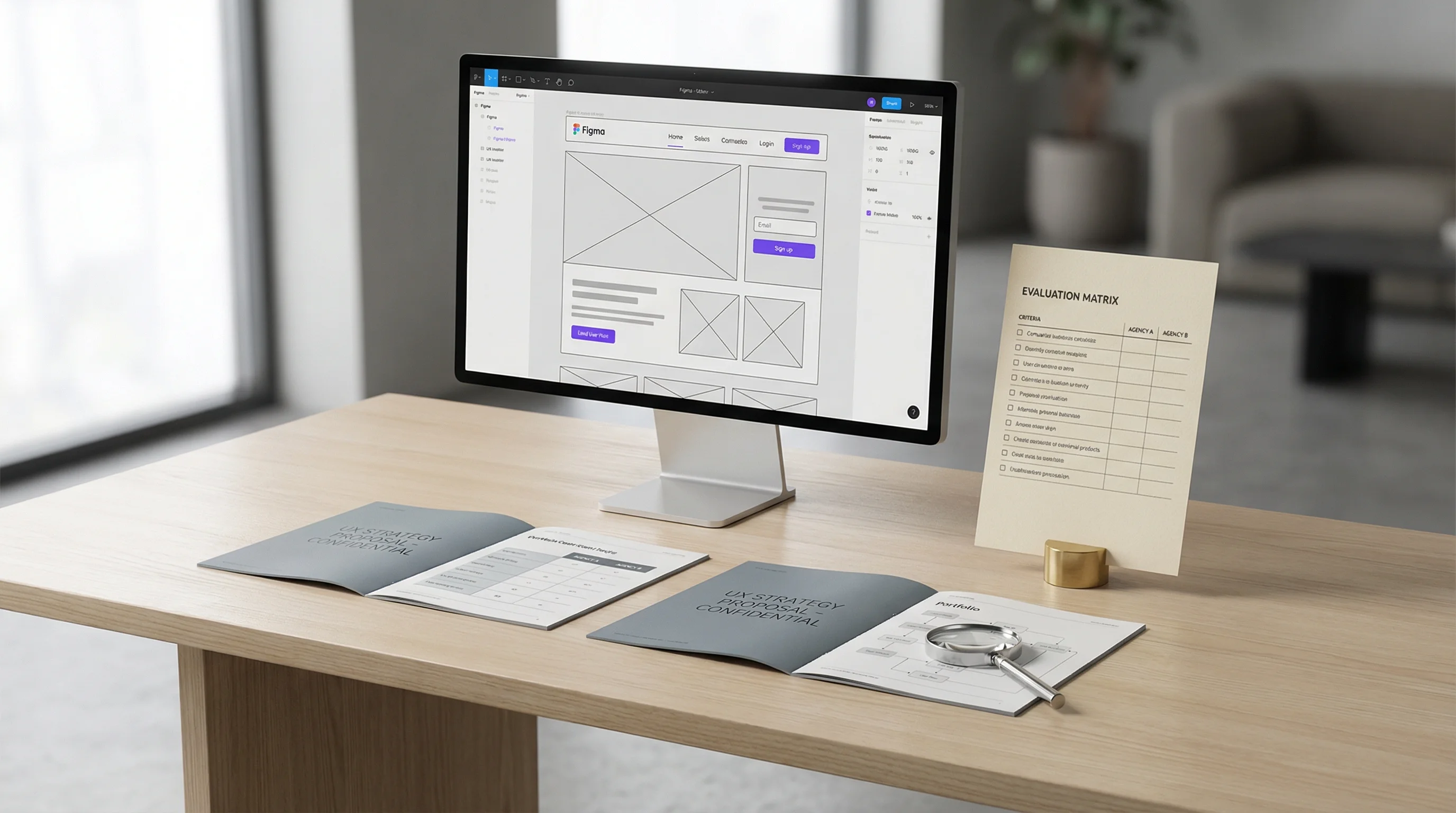
Why Choosing the Right UI UX Design Agency Matters More Than You Think
The wrong UI UX design agency will cost you far more than their fee. A misaligned agency produces design deliverables that look polished in a presentation but fail to connect with real users — leading to a launch that underperforms, a product that requires expensive rework, and months of lost momentum. The stakes are high, and the UK market for UI UX design agencies is crowded with providers ranging from exceptional specialists to generalists who learned the terminology last year.
This guide gives you a structured framework for evaluating UI UX design agencies in the UK — covering the questions you must ask, the red flags to watch for, and the criteria that differentiate genuinely capable agencies from those that are good at pitching.
What Is a UI UX Design Agency — and What Should It Do For You?
The terminology can obscure what you are actually buying. UX (User Experience) design covers the structural, functional, and experiential layer of a digital product: how users navigate, what tasks they can complete, how efficiently they reach their goals, and how the product makes them feel. UI (User Interface) design covers the visual layer: the typography, colour, spacing, iconography, and interaction states that users see and touch.
A true UI UX design agency integrates both disciplines under a unified methodology. The user experience strategy informs the interface design decisions, and the interface design is tested with real users to validate UX assumptions. Agencies that separate the two — producing a UX strategy deck and then a separate visual design — typically produce less coherent outcomes than agencies that treat them as inseparable parts of the same creative process.
What a competent UI UX design agency should deliver:
- A clear diagnostic of your current user experience problems (not assumptions)
- User research that surfaces real user needs, not client stakeholder opinions
- Validated wireframes and prototypes tested before pixel-perfect design begins
- A UI design system that scales as your product grows
- Developer-ready Figma files with annotation, components, and interaction specifications
- Measurable improvement in the business metrics that the design was built to affect
Six Criteria for Evaluating a UI UX Design Agency
1. Research Methodology
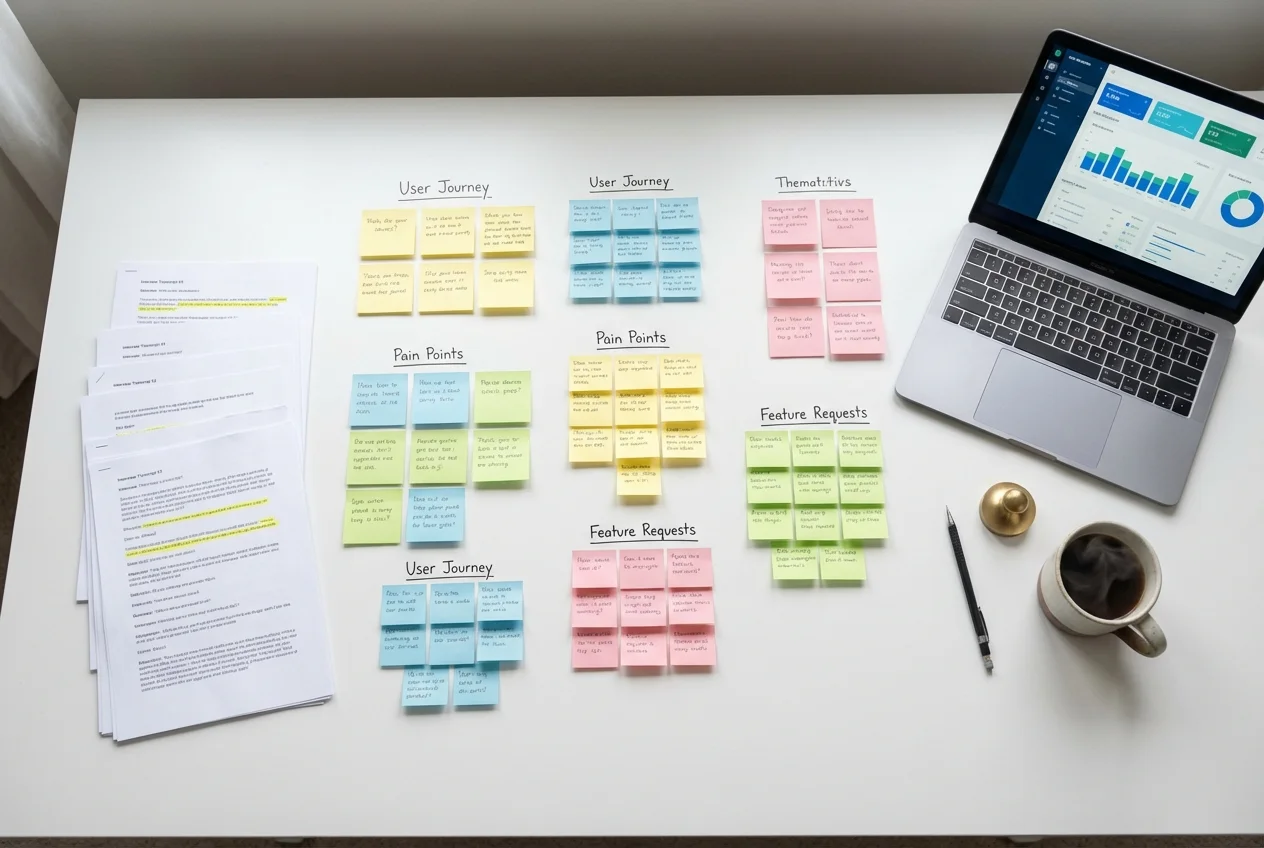
The single most reliable indicator of a capable UI UX design agency is how they talk about research. Agencies that jump immediately to visual design are skipping the step that ensures the design solves the right problem. Before any visual work begins, a rigorous agency will want to understand your users through interviews, usability testing, analytics review, or some combination of these methods.
Ask every agency you evaluate: "What does your research phase look like?" A strong answer describes specific research methods, explains how findings are synthesised into design decisions, and acknowledges that research sometimes changes the brief. A weak answer is any variation of "we do a kickoff call and then begin designing."
2. Case Studies With Business Outcomes
Design portfolios are curated to look impressive. What you need to evaluate is not whether the agency's work looks good, but whether it worked. Ask for case studies that include before-and-after metrics: conversion rates, task completion rates, user satisfaction scores, support ticket volumes, or revenue impact.
Agencies that cannot share business outcome data from their work — citing NDA constraints for every single case study — should be viewed with scepticism. Most clients are willing to share at least relative improvement figures (e.g., "checkout completion improved by 28%") if the relationship is genuinely collaborative and results-oriented.
3. UX Strategy Capability
A strategic UX agency will help you answer questions like: which UX investments will move growth metrics? What is the right sequencing for our design roadmap? How do we balance new feature development with UX debt remediation? These are strategic questions that require business understanding, not just design skill.
If an agency's response to these questions is "that's outside our scope — we just do the design," they are a design execution service, not a strategic partner. For most businesses, the strategic layer is where the most value is created — and it is worth paying for an agency that can operate there.
4. UI Design System Thinking
How an agency thinks about UI design systems tells you a great deal about their engineering-awareness and their understanding of how design scales. An agency that delivers beautiful one-off screens without a coherent component library is creating a maintenance problem for your development team. Every design decision that lacks a systematic equivalent — a consistent spacing scale, a component with documented variants, a colour token with a semantic name — will need to be re-decided by a developer at implementation time.
Ask to see examples of design system work. Look for evidence of component thinking, token architecture, and documentation quality. An agency that takes UI design systems seriously will have Storybook links, token files, or at minimum a well-structured Figma component library to show you. Read our guide on preparing Figma files for code handoff to understand what good handoff looks like.
5. Accessibility and Technical Constraints
WCAG 2.2 AA compliance is no longer optional for UK businesses — it is increasingly a legal requirement under the Equality Act. A competent UI design agency treats accessibility as a design constraint from the start, not a retrofit. Ask specifically how the agency handles colour contrast, focus states, keyboard navigation, and screen reader compatibility in their design process.
Beyond accessibility, ask how the agency engages with technical constraints. The most elegant design is worthless if it cannot be built within your technology stack, timeline, and budget. Agencies with engineering experience or close developer partnerships will have a more realistic view of implementation complexity than pure design studios.
6. Communication and Process Transparency
Agency-client relationships frequently break down not because of design quality but because of communication failures: unclear scope, late feedback cycles, stakeholder surprises, and deliverable ambiguity. Before signing, understand exactly how the agency manages projects: What does a typical week look like? How do you handle scope changes? What does the review and feedback process look like? How are disagreements about design direction resolved?
Look for agencies that have documented processes, clear milestone structures, and a track record of proactive communication. An agency that describes its process vaguely is either making it up as they go or hiding something.
Red Flags When Evaluating a UI UX Design Agency
Equally important as the positive criteria are the signals that should make you cautious:
- Jumping to solutions before understanding the problem. If an agency presents design concepts in a pitch meeting before doing any research, they are showing you what they think looks good — not what will work for your users.
- Portfolio that prioritises aesthetics over evidence. Beautiful work with no business context is a decorator's portfolio, not a UX agency's.
- No mention of testing or validation. Design that has never been put in front of real users is hypothesis, not design.
- Vague pricing with unlimited revisions. "Unlimited revisions" is usually a signal that scope is not well-defined, which leads to both overcharging and underdelivering.
- Inability to explain their process clearly. A capable team can describe how they work in plain language. Jargon-heavy descriptions of process ("we leverage a design thinking framework to ideate synergistic user journeys") signal insecurity about the actual methodology.
How to Structure Your Agency Selection Process
A structured selection process produces better decisions than instinct alone. Here is the framework we recommend:
Step 1 — Define your brief precisely. Know what problem you are trying to solve, what success looks like in measurable terms, your approximate budget range, and your timeline. Agencies cannot give you accurate proposals against a vague brief — and vague briefs tend to attract vague proposals.
Step 2 — Evaluate three to five agencies. Look at portfolios, read case studies, and have a preliminary call with each. Narrow to two or three for a formal proposal.
Step 3 — Request a paid discovery sprint. Rather than asking for a free pitch, offer a small paid engagement — a diagnostic session, a brief research sprint, or a paid discovery workshop. This reveals how an agency actually thinks and works, rather than how they present. The fee is minimal relative to the decision you are making.
Step 4 — Check references. Ask to speak with two or three previous clients. Ask specifically about communication quality, how scope changes were handled, whether the work delivered measurable results, and whether they would work with the agency again.
Step 5 — Evaluate proposals on outcome clarity. The best proposals describe what success looks like and how it will be measured — not just a list of deliverables. An agency that proposes "20 screens of UI design and a final Figma file" is selling time. An agency that proposes "a checkout flow redesign targeting a 15–25% improvement in completion rate, validated through prototype testing before full UI build" is selling outcomes.
Questions to Ask Every UI UX Design Agency You Evaluate
- Can you show me a case study where design directly improved a business metric, and describe exactly what you did?
- How do you handle stakeholder disagreements about design direction?
- What happens if user research reveals our brief is wrong?
- How do you involve our team in the design process — and at what points do you need input from us?
- What does a typical project timeline look like for a project of our scope?
- How do you approach WCAG accessibility compliance?
- What does your design handoff process look like, and have you worked with our tech stack before?
Working With Our UI UX Design Agency
We built our practice around the principles described in this guide — research before design, validation before build, business outcomes as the measure of success. Our UX research service ensures every design decision is grounded in evidence. Our UI design service delivers component-based, developer-ready interfaces that scale. Our strategic UX capability ensures the design roadmap aligns with your growth objectives.
If you are evaluating UI UX design agencies in the UK and want an honest conversation about whether we are the right fit for your project, book a free consultation. We will tell you clearly what we can deliver, what it will cost, and what success will look like — and if we are not the right agency for your situation, we will tell you that too.
 UX Research
 UX Audit
 UI Design