UX Design for B2B vs B2C: Key Differences Every Business Should Know
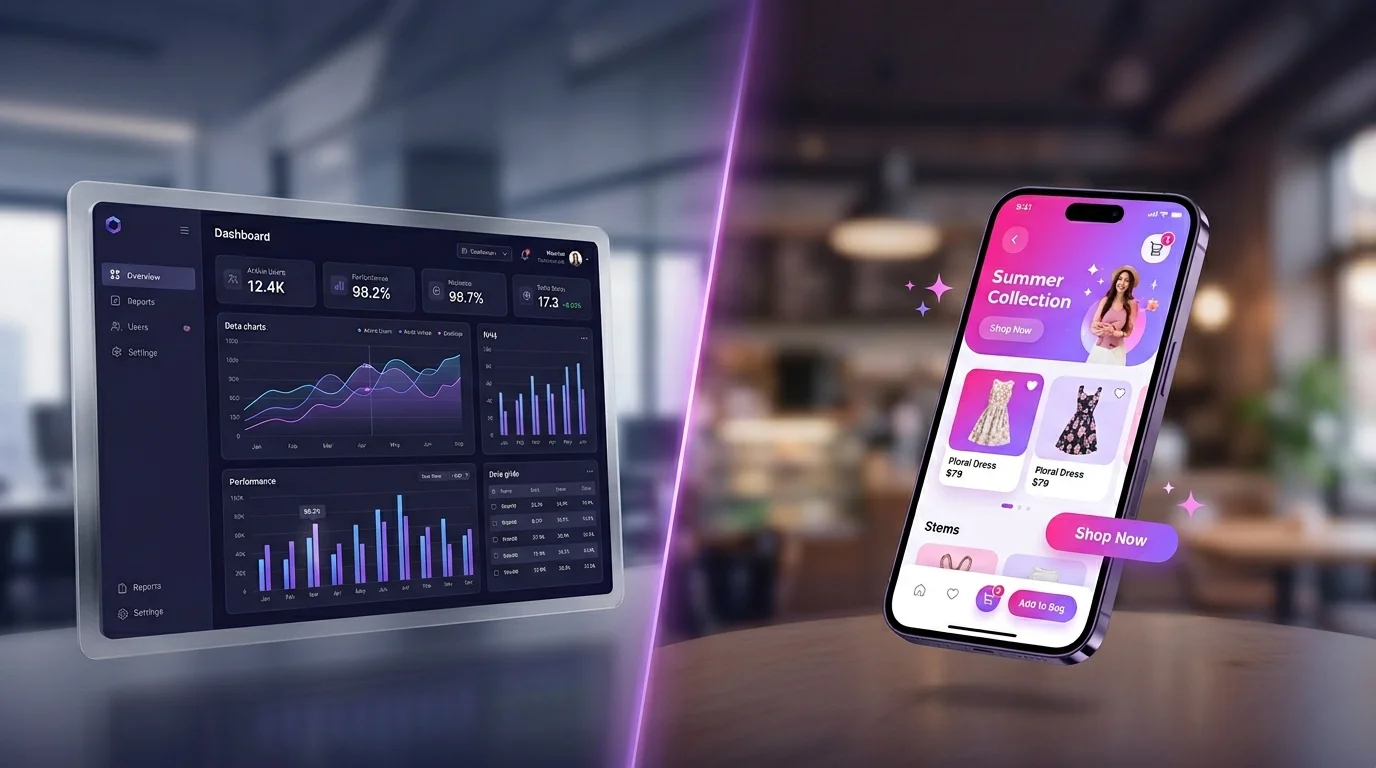
Why B2B and B2C UX Are Fundamentally Different
Looking for the fully updated 2026 breakdown? Our B2B vs B2C UX design guide for B2B SaaS covers the seven design dimensions where B2B and B2C diverge most, with current procurement and hiring guidance. The overview below remains a useful starting reference.
The visual design of a B2B SaaS platform and a consumer e-commerce site might look quite different. But the visual differences are the most obvious and the least important part of the distinction. B2B and B2C products require different design approaches at a deeper level — in how user research is conducted, what the conversion funnel looks like, what "usability" means, and how the product's success is measured.
Getting this wrong is common and costly. We've worked with consumer product teams who designed their B2B offering with a B2C mindset — optimising for emotional resonance and simplicity at the expense of the power and efficiency that professional users need. And we've worked with enterprise teams who brought the bureaucratic rigour of their B2B process into consumer products that needed to be effortless.
Here's a comprehensive breakdown of the key differences — and what they mean for how you should approach design.
The User and Their Relationship to the Product
B2C: One person, emotional, discretionary
In B2C products, the person using the product is typically the same person who chose to use it and often the same person who paid for it. They're using it for personal reasons — entertainment, personal productivity, shopping, health, finance. Their relationship to the product is emotional and largely discretionary. If they don't like the experience, they leave and find an alternative. There is no boss requiring them to use it; there is no organisational process it slots into.
This means B2C UX must work for first-time users with very low patience for friction. The product needs to deliver perceived value almost immediately. Onboarding must be welcoming and fast. The experience needs to feel personal.
B2B: Multiple stakeholders, rational, obligatory
B2B products exist in a much more complex human context. There is typically a buyer (who evaluates and purchases), multiple users (who use the product day to day), and often a technical stakeholder (who manages implementation and integration). These three groups have different needs, different levels of technical sophistication, and different measures of success. They may never interact with each other about the product — but the product needs to work for all of them.
B2B users also have a different relationship to the product than B2C users. They often didn't choose the product personally — it was selected by their organisation, potentially over other options they might have preferred. They are obligated to use it. This has significant UX implications: a frustrated B2B user can't simply leave, but they will use the product badly, generate support tickets, drive renewal risk, and advocate internally for a competitor. B2B UX must work for the reluctant user, not just the enthusiastic early adopter.
The Decision Journey
B2C: Individual, fast, emotional
B2C purchase decisions can happen in seconds. An impulse purchase on a mobile app, a subscription sign-up after a friend's recommendation, a download after seeing an ad. Even considered B2C purchases — a new laptop, a holiday — involve a relatively short and relatively individual decision process.
B2C UX is designed around this short-cycle decision journey. Landing pages need to convert quickly. Sign-up flows need to reduce friction to the minimum. The moment users see value needs to come as fast as possible.
B2B: Organisational, long, rational
B2B purchase decisions involve multiple stakeholders, procurement processes, legal review, security assessment, and comparison against alternatives — often over weeks or months. The initial website visit is rarely the decision moment; it's an early-stage research step in a much longer journey.
This fundamentally changes what B2B UX needs to do. The website doesn't need to close a sale; it needs to generate qualified interest. The product doesn't need to convert in the first session; it needs to demonstrate enough value during an evaluation period to win the renewal conversation. B2B UX is optimised for the long game.
Complexity and Depth
B2C: Simple enough for anyone
Consumer products are generally designed for non-expert users. The interaction model needs to be intuitive to someone encountering it for the first time, without training or documentation. This means designing for simplicity, minimising required input, and making the product work well for the least experienced user in the audience.
B2B: Power for professionals
B2B products, especially in specialist industries, are used by professional experts who understand their domain deeply. An accountant using accounting software, a developer using a code repository platform, a data analyst using a BI tool — these users have high domain expertise. They benefit from powerful features, keyboard shortcuts, efficient workflows, and the ability to customise the product to their specific way of working.
Designing a B2B product too simple in pursuit of consumer-style usability often means stripping out the power that professional users depend on. The right target is not "easy for anyone" but "efficient for experts, accessible to beginners."
Onboarding
B2C onboarding: Fast, emotional, value-first
Consumer onboarding needs to deliver the product's core value as quickly as possible. The "time to value" — the moment when a new user first experiences why the product is worth using — should be measured in minutes, not days. Every additional step before that moment is an opportunity for the user to leave. Progressive disclosure, social sign-in, optional profiling steps, and template-based starting points are all tools for getting users to value fast.
B2B onboarding: Thorough, structured, support-heavy
B2B onboarding serves a different function and can be more extended without the same dropout risk. An enterprise software product might have an onboarding process that spans days, with guided setup steps, data import, team invitation, and configuration. Users know they're in an implementation process and expect it to take time — as long as it's clearly structured and has visible progress.
B2B onboarding also typically involves more human support — a customer success manager, onboarding calls, documentation — because the cost of a failed implementation is high for both the client and the vendor.
Metrics That Matter
B2C metrics: Volume, conversion, engagement
B2C products are typically measured on: number of sign-ups, conversion rate (free-to-paid or visitor-to-purchaser), daily active users, session length and frequency, churn rate, and net promoter score. These are high-volume, aggregate metrics that reflect the behaviour of a large user base.
B2B metrics: Adoption, expansion, retention
B2B products care about different numbers: feature adoption by user segment (are all the different user types actually using the product or only some?), seat expansion (does the product spread to more users within an account over time?), renewal rate, multi-year contract conversion, and account health score. These are relationship metrics that reflect the depth of product integration into a customer's organisation.
These different metrics lead to different UX priorities. B2C UX optimises for the first impression and the conversion moment. B2B UX optimises for long-term daily workflow efficiency and stickiness.
Practical Implications for Your Design Brief
If you're designing a B2B product:
- Map all user roles and their distinct needs before starting design
- Design for expert efficiency, not just first-time usability
- Give significant weight to onboarding and first-use experience for new accounts
- Design for the full account lifecycle, not just acquisition
- Invest in documentation and in-app help that professional users can rely on
- Include admin and settings UX — these are often neglected and matter enormously to the people who manage the product
If you're designing a B2C product:
- Minimise time to first value above almost everything else
- Design the first session as if users have the attention span of someone browsing on a phone
- Build emotional resonance into the visual and interaction design
- Reduce friction in conversion flows to the absolute minimum
- Design for discoverability — users won't read documentation
- Personalisation has higher ROI in B2C than B2B
The distinction isn't always clean — some products serve both markets, and plenty of modern "product-led growth" B2B companies have borrowed heavily from B2C design thinking. But understanding where you sit in this spectrum helps you make better decisions about what to prioritise in your design process. If your product sits firmly on the B2B side, working with a specialist B2B UX design agency that designs for economic buyers, power users and occasional users differently will typically outperform a generalist studio.
What a Specialist B2B UX Design Agency Does Differently
A generalist studio will happily take on a B2B SaaS brief, but the process usually looks identical to a B2C engagement: a handful of interviews, a moodboard, a set of polished screens. A specialist B2B UX design agency runs a different process because the underlying problem is different — it maps every stakeholder in the buying and using journey (economic buyer, admin, day-to-day user), designs for the reluctant obligated user rather than the enthusiastic early adopter, and ties every design decision back to a business metric — activation, seat expansion, renewal — rather than aesthetic preference alone.
This is the gap we see most often when auditing B2B products designed by generalist teams: onboarding built for delight rather than structured implementation, admin and settings screens treated as an afterthought, and no design consideration for the account lifecycle beyond the first sign-up. A B2B UX design agency that has run this process repeatedly across SaaS, fintech, and enterprise tools catches these gaps before they ship, not after churn data reveals them.
How do I know if I need a B2B UX design agency rather than a generalist studio?
If your product has more than one type of user (buyer, admin, day-to-day user), a sales cycle measured in weeks rather than minutes, or retention that depends on ongoing account health rather than a single purchase moment, a specialist B2B UX design agency will typically outperform a generalist studio on the metrics that matter to your board.
Can a B2B UX design agency work alongside our in-house product team?
Yes — most of our B2B engagements run embedded inside an existing product and engineering team rather than as a standalone external project, contributing research, IA, and UI work directly into the existing sprint cadence rather than delivering a separate static handoff.
What's the first sign we've outgrown a generalist design partner?
The clearest signal is when design decisions start being justified by taste rather than evidence — no research backing feature priority, no metric attached to a redesign, no distinction made between what your power users need and what a first-time evaluator needs. That's the point to bring in a dedicated UX strategy-led B2B UX design agency.
B2B User Experience: A Fast Reference
Summarising the above for anyone comparing B2B vs B2C design at a glance: good B2B user experience is judged on adoption, expansion and renewal, not first-session delight. Where B2C UX chases a single emotional conversion moment, B2B UX is designed around a multi-stakeholder buying group and a long account lifecycle — which is exactly why a generic "b2b vs b2c design" checklist misses the point. The user, the decision journey, the onboarding model and the metrics are different at every layer, and treating B2B UX as "B2C with more forms" is the single most common mistake we see in UX audits of enterprise and SaaS products.
Is "B2B UX" the same discipline as consumer UX with extra steps?
No. B2B UX design accounts for multiple stakeholders (buyer, admin, daily user) with conflicting priorities, an obligatory rather than discretionary relationship to the product, and success metrics — adoption, expansion, renewal — that only reveal themselves over months. Consumer UX optimises for a single user's fast, emotional, voluntary decision. Applying B2C heuristics wholesale to B2B products under-serves the power users who drive renewal.
Where do most B2B user experience projects go wrong?
Almost always at the handoff between research and design: teams gather B2B user experience insight from a handful of interviews, then default back to B2C-style polish (delight-first onboarding, minimal admin UX) because it's the pattern the team knows. A specialist B2B UX design agency keeps the stakeholder map and account-lifecycle view live throughout the design process, not just at the research stage.
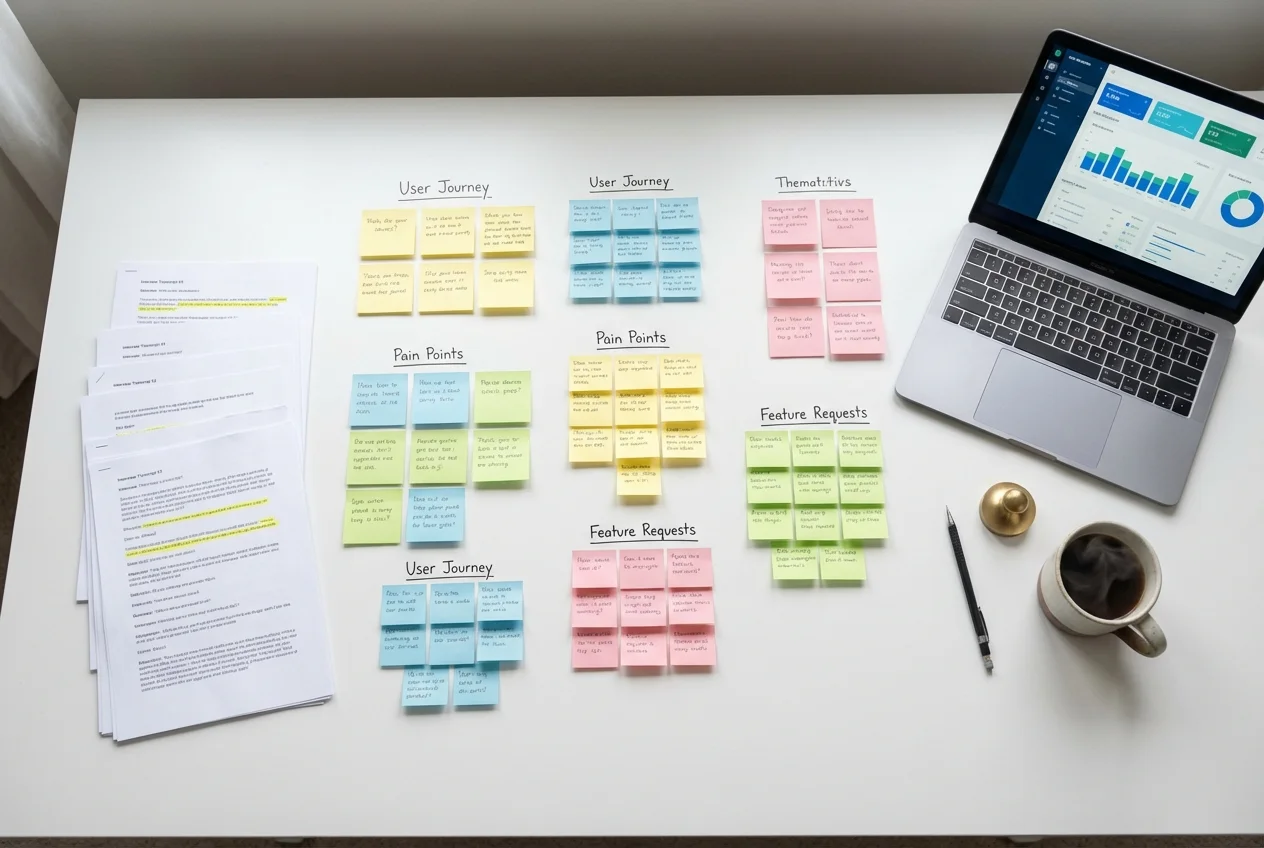 UX Research
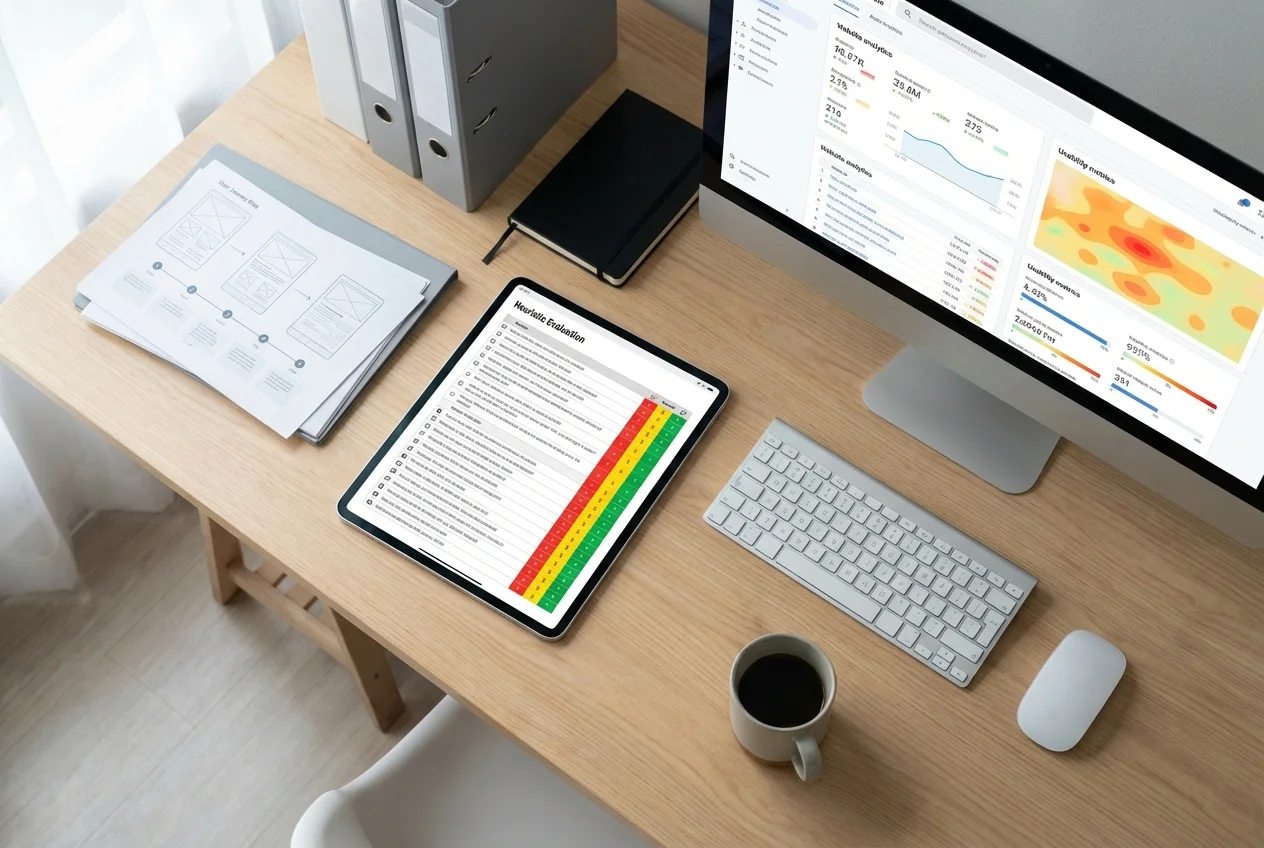 UX Audit
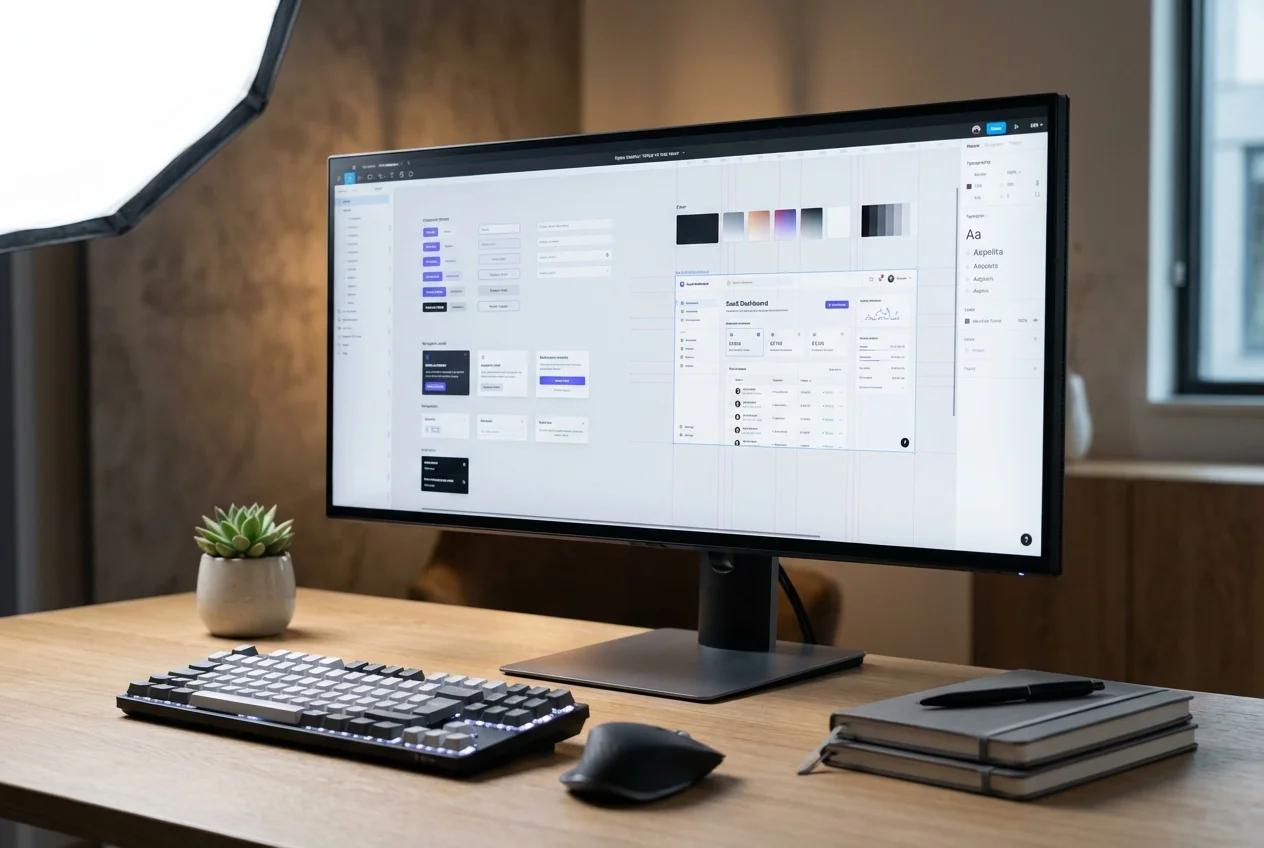 UI Design