What Is UX Design? A Plain-English Guide for Business Owners
Why "Making It Look Nice" Is Not UX Design
Ask ten people what UX design is and you'll get ten different answers. Some will say it's about making websites pretty. Others will say it's app design. Some — usually people who've worked with a UX designer — will say something about "making things easier to use." The last group is closest, but even that doesn't capture the full picture.
UX stands for User Experience. UX design is the discipline of intentionally shaping the experience a person has when using a digital product — a website, an app, a web application, a piece of software. It's a much broader and deeper practice than visual design, and confusing the two is one of the most expensive mistakes business owners make when they're thinking about their digital products.
This guide is for business owners and decision-makers who want to understand what UX design actually is, why it matters for business outcomes, and what to look for when working with UX designers.
The Experience Is Everything
Start with this: every digital product creates an experience. When someone visits your website for the first time, they have an experience — the sensation of arriving somewhere new, quickly forming impressions about what it is, whether it seems trustworthy, whether it has what they need. When they try to find your pricing, they have an experience — finding it immediately and feeling reassured, or clicking through several pages without success and feeling frustrated.
When someone uses your app to accomplish a task, they have an experience. When they try to create an account, update their settings, find help when something goes wrong — all experience. When they recommend your product to a colleague or cancel their subscription — both of those decisions were shaped by the accumulated experience of using your product.
UX design is the practice of taking those experiences seriously and shaping them deliberately. Left to chance, digital experiences are usually mediocre — because the people who build digital products understand them too well to see them through new users' eyes. UX design brings the user's perspective back into the room.
What UX Designers Actually Do
UX designers don't start with a blank canvas and ask themselves "what would look good here?" They start with questions about people.
Understanding Users
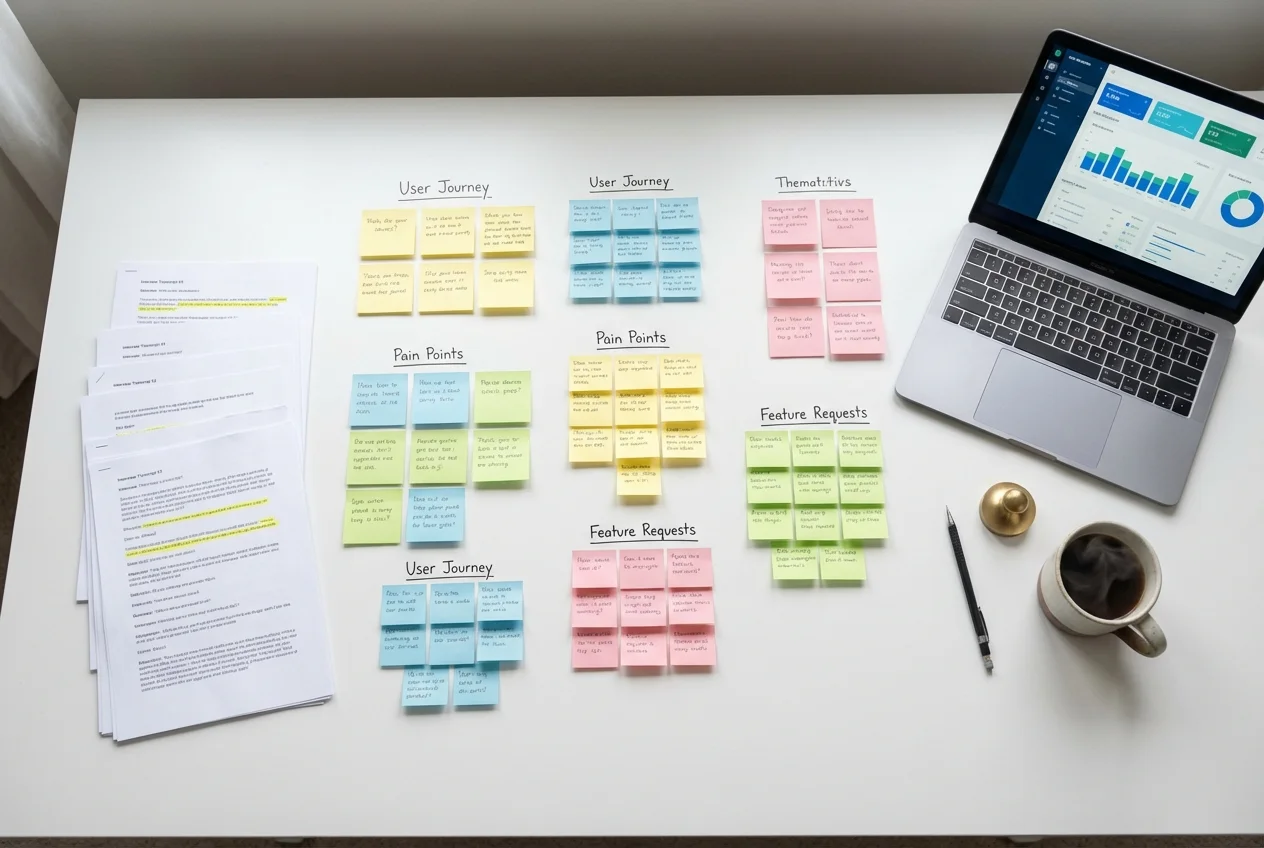
The foundation of UX work is understanding the people who use the product. Who are they? What are they trying to accomplish? What do they already know, and what are they likely to find confusing? What other products have shaped their expectations? What does frustration look like for them, and when does it reach the point where they give up?
These questions are answered through research — user interviews, usability testing, surveys, analytics analysis, and review of support tickets and customer feedback. A UX designer without a research practice is guessing. A UX designer with good research is designing with evidence.
Defining the Problem
Before designing a solution, UX designers define the problem. This sounds obvious but is frequently skipped. Many digital product failures happen because the team built a solution to the wrong problem — one that seemed right from the inside but didn't match what users actually needed.
Good UX designers are sceptical of briefs that go straight to solutions. "We need a redesigned checkout" is a solution. The underlying problem might be "our checkout abandonment rate is high on mobile" — and the solution to that might or might not be a full redesign. Defining the right problem before designing a solution is one of the highest-value things a UX designer does.
Designing the Structure
Once the problem is understood, UX designers design the structure of the solution — the information architecture, the navigation patterns, the user flows. This is the "bones" of the experience: how content is organised, how users move between sections, what the key paths through the product look like. This typically happens at the wireframe stage — simple, black-and-white layouts that define structure without introducing visual design.
Prototyping and Testing
Before any visual design is applied and before any code is written, good UX practice involves testing the structural design with real users. Interactive prototypes allow users to navigate the experience and attempt realistic tasks — surfacing confusion, mismatches between expectation and reality, and design decisions that seemed logical from inside the project but turn out to be counterintuitive to new users.
This is the step most teams skip under time pressure, and it's the step that would prevent the most expensive mistakes.
Collaborating on Visual Design
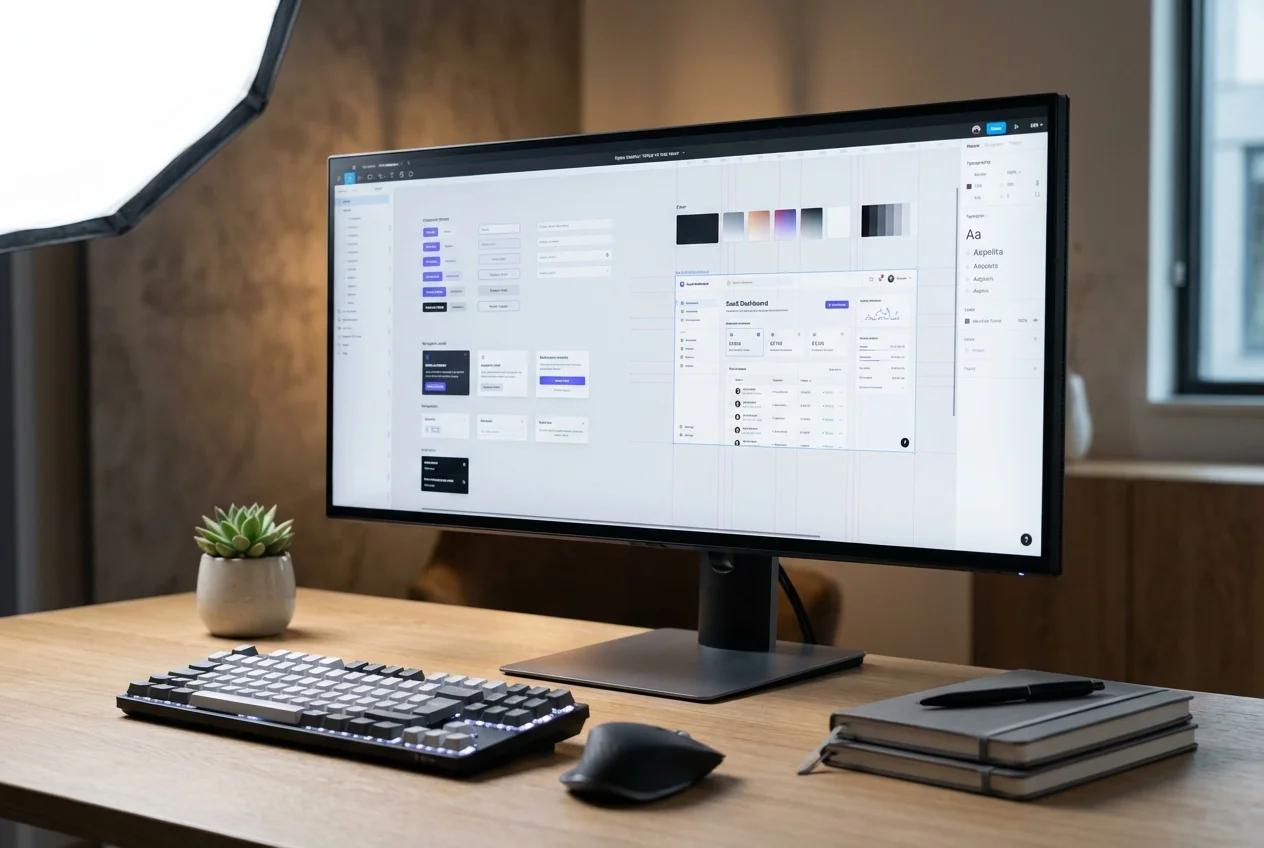
UX design and visual (UI) design overlap significantly in practice, and many designers do both. The visual layer — colour, typography, iconography, spacing, imagery — shapes the experience profoundly: how trustworthy the product feels, how easy it is to scan and read, how clear the visual hierarchy makes the priority of different elements. Good UX design and good visual design reinforce each other.
Why UX Design Matters for Business Outcomes
Let's be direct about this: UX design is not a luxury. It's not the icing on the cake that you invest in when you've sorted out the "real" business problems. For most digital businesses, the user experience of the product is one of the most significant drivers of commercial outcomes.
Conversion
Every step in your conversion funnel is a UX problem. How clearly your value proposition is communicated, how easy it is to navigate to pricing, how many fields your sign-up form has, how confident users feel at the payment step — these are all design decisions that drive conversion rate. Forrester Research found that improving UX can increase conversion rates by up to 400%. That's not a marginal improvement; it's transformational.
Retention and Churn
Users who find a product confusing or frustrating don't stay. If the onboarding experience doesn't quickly get users to their first moment of value, they'll disengage before they've had a chance to understand what your product can do for them. Poor UX drives churn — and the cost of acquiring a new customer to replace one who churned is substantial in almost every business model.
Support Costs
When users can't figure out how to do something, they contact support. Every support ticket represents a UX failure — a point in the product where the interface should have guided users but didn't. Improving UX reduces support volume, and the relationship is typically significant: we've seen support ticket volumes drop by 30–50% following UX improvements to onboarding and key workflows.
Brand Perception and NPS
Products that are easy and pleasant to use are products that users recommend. Net Promoter Score — one of the most widely tracked metrics in product businesses — is driven heavily by product experience. A product that users love to use is one that generates organic referral and positive reviews. A product that frustrates users generates complaints, negative reviews, and silent churn.
Common Misconceptions About UX Design
"UX is just common sense — we don't need specialists for that."
Common sense is not a reliable guide to user experience. The history of digital products is littered with things that seemed obviously sensible to the people who built them and turned out to be deeply confusing to the people who used them. UX designers bring methods and frameworks for checking assumptions against reality — which turns out to be very different from common sense.
"We'll sort out UX when we have more budget."
Poor UX in an early product trains users in bad habits, creates negative first impressions that are hard to recover from, and accumulates UX debt that gets increasingly expensive to fix. Getting UX right early — even at a basic level — is significantly cheaper than fixing it after you've scaled.
"We need a UX designer who can also do visual design and frontend development."
This mythical "unicorn" exists but is rare, and expecting all three skills at expert level from one person at a single salary is unrealistic. UX research and strategy, visual UI design, and frontend development are three distinct disciplines. Most teams either need to prioritise which matters most right now, or work with an agency that provides the full range.
Where to Start
If you've never worked with a UX designer or agency before, the most useful starting point is usually a UX audit of your current product. This gives you a systematic, evidence-backed picture of what's working and what isn't — and a prioritised roadmap of what to fix first. It's the fastest way to understand where UX investment will have the most impact for your business.
If you're building something new, start with a discovery and research phase before any design work begins. Understanding your users before you design for them sounds obvious, but it's surprisingly rare in practice — and it's the single biggest predictor of whether the end product will work.
Either way, we're happy to have an honest conversation about what you're working on and where UX design can make the most difference. Book a free consultation and we'll take it from there.
If you've read this far and are now wondering what working with a specialist actually involves, our guide to what a UX design agency does breaks down the process step by step, and our UX design agency team is happy to talk through your specific product.
 UX Research
 UX Audit
 UI Design