Design Agency UI UX: How UK B2B Buyers Compare in 2026
Why "Design Agency UI UX" Is the Right Search Phrase
The buyers we work with at UK B2B brands rarely search for "user experience designer" or "product design studio" first. They search for "design agency ui ux" — and that is the more sophisticated query, because it acknowledges that the two disciplines have to be bought together if the output is going to actually convert. UI without UX produces beautiful screens that do not move the metric. UX without UI produces evidence-rich wireframes that engineering cannot ship. A design agency that does both, in the same engagement, with the same senior people in the room, is the category of partner that consistently outperforms the alternatives in 2026.
This guide is the practical comparison framework we hand to UK product directors, heads of digital, and B2B founders when they are evaluating a design agency for UI/UX work. It will not tell you which agency to hire. It will tell you, in roughly forty-five minutes of disciplined work, which three you should be shortlisting and which seven you should be eliminating.
What a Genuine UI/UX Design Agency Actually Delivers
A credible UI/UX design agency works in a sequence that looks the same on the surface across most studios — research, wireframes, visual design, prototyping, handoff — but the depth at which each step is executed is the entire difference between an engagement that moves the business metric and one that produces polished mockups nobody ships. A specialist design agency for UI/UX work in 2026 should be able to evidence, in named case studies, that their research practice produces decisions (not just slide decks), that their wireframes are testable (not just illustrative), that their visual design is grounded in design tokens and a real component library, and that their handoff produces engineering velocity (not friction).
The most useful test you can apply when evaluating any design agency UI UX positioning: ask them to walk you through one shipped engagement end-to-end. Genuine practitioners answer in minutes, with specific decisions, specific user-test findings, and specific commercial outcomes. Pitch-driven studios answer in process diagrams and adjectives. The distinction is reliably predictive.
The Three Categories of UK UI/UX Design Agency
Before you start comparing studios, recognise that the UK design agency market for UI/UX work is not one market. It is three. Lean validation agencies serve seed and Series A founders shipping fast, with engagement budgets of £8k–£30k and timelines measured in weeks. Specialist UI/UX studios serve growth-stage scale-ups and mid-market B2B brands with £25k–£120k engagements and a clear vertical specialism. Enterprise UX consultancies serve heads of digital at large UK organisations with £100k–£500k+ programmes and a multi-quarter rhythm. The single most common cause of failed engagements is hiring the wrong category — a lean studio for an enterprise programme hits governance walls; an enterprise consultancy for a founder-led MVP burns the budget before the first prototype.
For a fuller framing on this categorisation, our best UX design agency UK 2026 buyer's guide walks through it with worked examples, and our UI/UX design agency UK overview covers the wider buyer landscape.
The Seven Criteria That Separate UI/UX Design Specialists
Across the comparison exercises we have observed UK buyers run, seven criteria correlate consistently with engagement success. A specialist design agency for UI/UX work will pass at least six of the seven.
1. Outcome evidence in named case studies. Public case studies with specific conversion, retention, or revenue numbers — not just "improved user satisfaction". 2. The senior team is the delivery team. The strategist who pitches is the strategist who runs the engagement. 3. A defensible research practice. The agency can name moderated and unmoderated research platforms it uses, recruitment partners, and structured synthesis methods. 4. Design systems as a default, not an extra. A specialist UI/UX agency delivers tokens, components, patterns, and documentation as part of the engagement — not as a follow-on quote. 5. Code-credible handoff. Even if you are only buying design, the agency should articulate exactly how their output integrates with engineering — and ideally offer a Figma-to-code or frontend development path. 6. Transparent commercial terms. Day rates, payment milestones, and change-order policies shared on first request. 7. A vertical specialism. The strongest UK design agencies for UI/UX work focus deliberately — B2B SaaS, fintech, healthtech, e-commerce, public sector — because pattern recognition compounds inside a vertical.
The Five Questions to Ask Every Shortlisted Design Agency
Once you have three candidates, the fastest way to discriminate between them is a single 60-minute briefing call structured around five questions. "Tell me about a recent engagement where your work moved a specific business metric — and what you would do differently." Agencies that cannot describe a failure honestly are the agencies most likely to fail. "Walk me through your research-to-design synthesis on a real project." Genuine practitioners answer in minutes; pitch-driven studios answer in generalities. "Who would be assigned to our engagement, and what is their background?" Get names and LinkedIn URLs in the follow-up email. "How do you price change orders, and what was the average overrun on your last five projects?" A trustworthy partner will share this. "What would you not work on, and why?" A specialist with strong opinions is dramatically more useful than a generalist with none.
How UK UI/UX Design Agencies Price in 2026
Pricing is the criterion most buyers fixate on first, and it is the criterion that matters least if the four above are answered well. That said, the commercial pattern across UK design agencies for UI/UX work is consistent enough to map. Lean validation agencies charge £700–£950 per consultant-day; engagements typically come in at £10k–£30k. Specialist UI/UX studios charge £950–£1,400 per consultant-day; engagements typically come in at £35k–£120k. Enterprise UX consultancies charge £1,400–£2,200 per consultant-day; multi-quarter programmes commonly land between £150k and £500k. One pricing trap to flag: agencies that quote substantially below the band for their category. A "specialist studio" engagement priced at lean-validation rates almost always means the work will be delegated to junior designers or offshore subcontractors. The day rate is not a luxury — it is the proxy for who actually does the work.
The Three Red Flags That Disqualify a Design Agency Fast
Three signals reliably predict a poor UI/UX engagement, and any one of them should remove an agency from your shortlist immediately. A portfolio dominated by visual mockups, not shipped products. If the case studies are Dribbble shots rather than live URLs, the studio has not been pressure-tested by production constraints. An unwillingness to discuss measurable outcomes. Specialist UI/UX design agencies talk in conversion deltas, retention improvements, and revenue impact; weaker studios talk in adjectives. A "process" that is identical regardless of your problem. If the agency presents the same five-step double-diamond regardless of whether you are buying research, redesign, or implementation, you are buying a template not a partnership.
Where UI/UX Specialists Outperform Generalist Design Agencies
The case for a specialist UI/UX design agency over a generalist sharpens further when your problem has any of three characteristics: a complex domain that takes weeks to learn, a measurable business metric the engagement must move, or a downstream engineering team that needs production-credible design output. In those situations, the cost of a generalist's learning curve, vague metrics, and design-only handover quickly outweighs any nominal day-rate saving. For a deeper walkthrough of how a specialist creative UI/UX agency operates differently in practice, our creative UI/UX agency comparison guide is the natural next read, and our strategic UX design agency UK guide covers how strategy and execution work together.
How to Run the Shortlisting in 45 Minutes
The mistake most UK buyers make is treating design agency selection as a multi-week procurement exercise. In practice, a disciplined 45-minute pass through the seven criteria and the three red flags will eliminate seven of ten candidates. Spend ten minutes per shortlisted studio on their published case studies and named senior staff. Spend five minutes scanning their commercial transparency. Spend ten minutes reading two recent blog posts or talks from named team members. If they pass that bar, schedule the 60-minute briefing call. If they do not, move on without sentimentality — the UK has more than enough credible design agencies for UI/UX work that you do not need to settle.
Where We Sit in the UK UI/UX Design Agency Market
We are a specialist UI/UX design agency working with B2B brands across SaaS, fintech, and enterprise platforms. We do not pitch lean-validation engagements at startup rates, and we do not pitch enterprise transformation programmes — we sit in the middle, where the work is research-led, conversion-focused, and code-credible end-to-end. If that category fits your situation, the most useful next step is a working conversation, not a proposal.
Book your free 45-minute call with a senior UI/UX designer — we will give you an honest read on whether we are the right shortlist candidate for your specific problem, and which other UK design agencies you should be talking to if we are not. Or explore our full UX design agency services to see how we partner with UK B2B brands from research through production.
Next step: write your agency UX brief before requesting quotes.
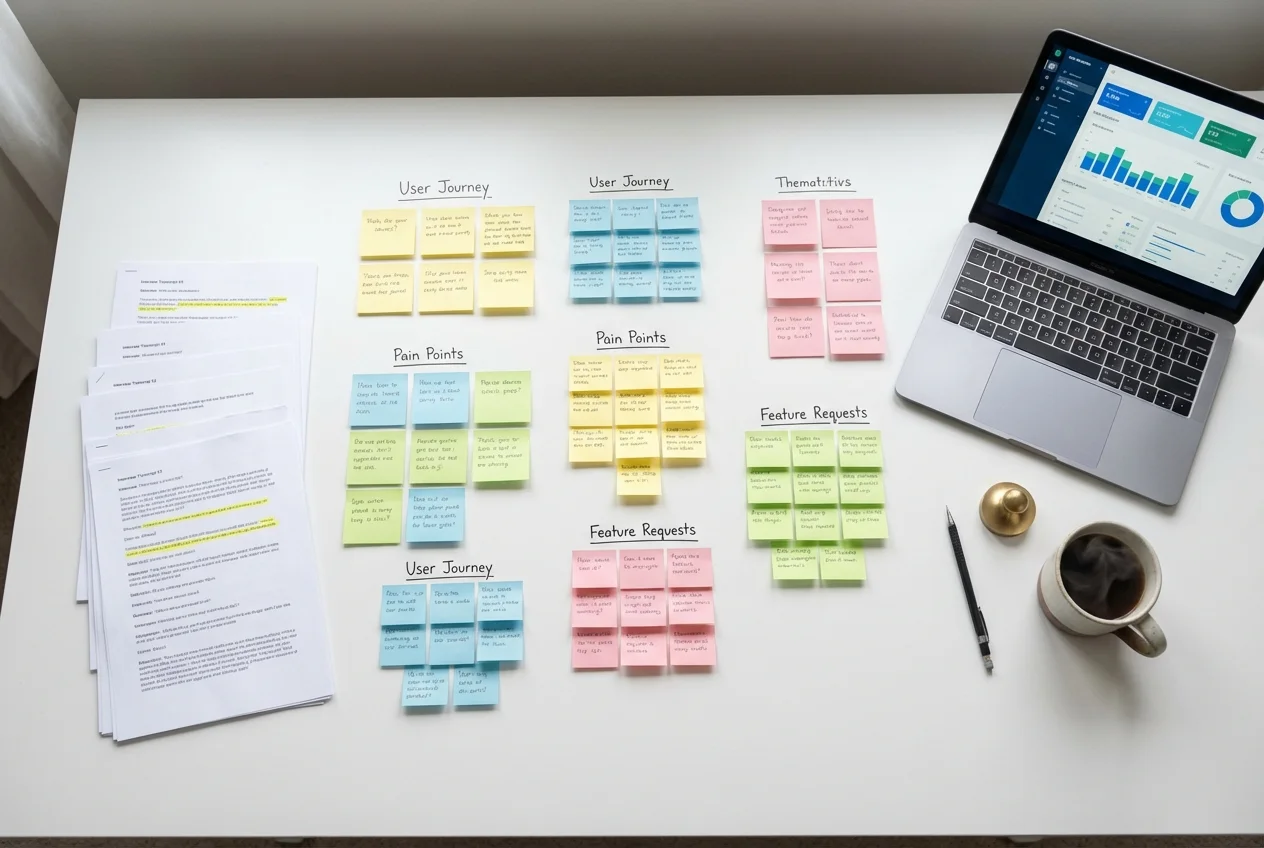 UX Research
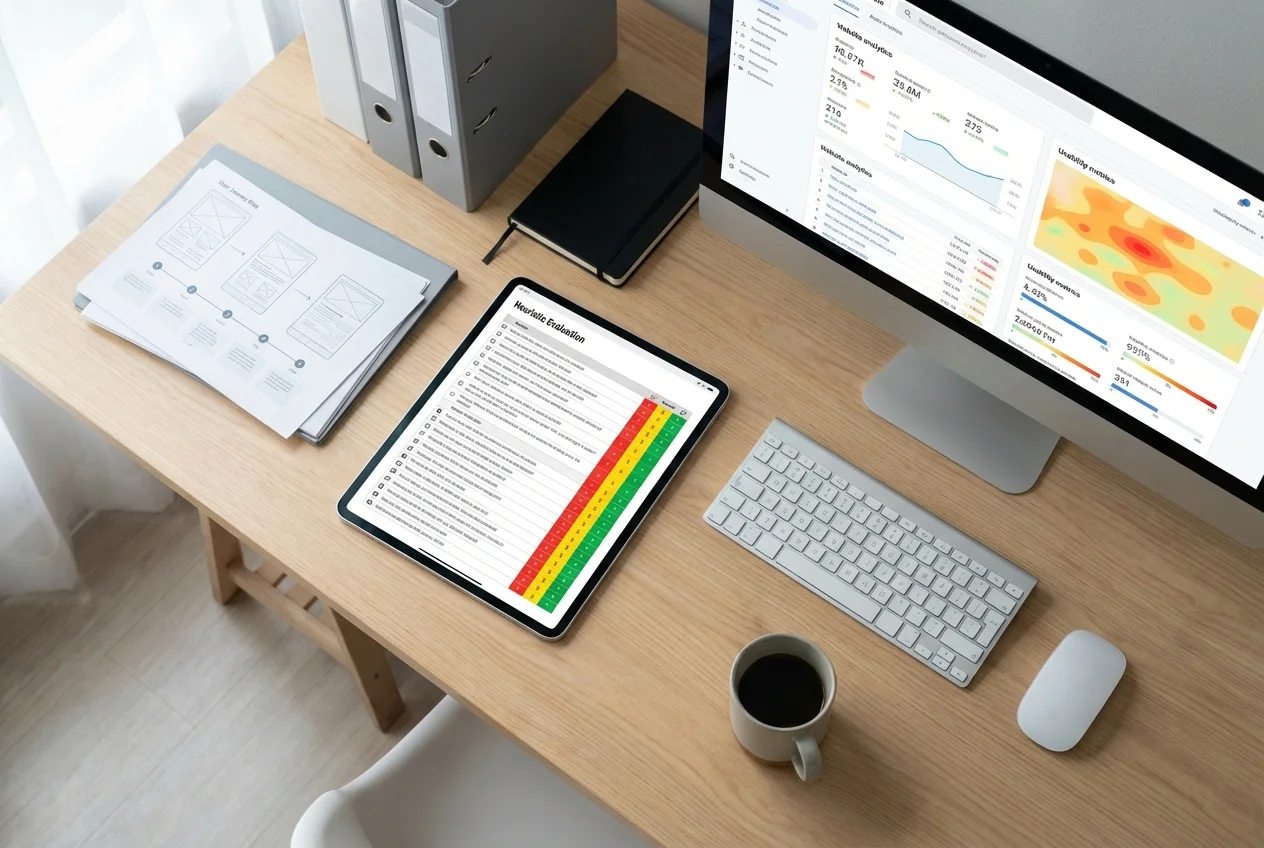 UX Audit
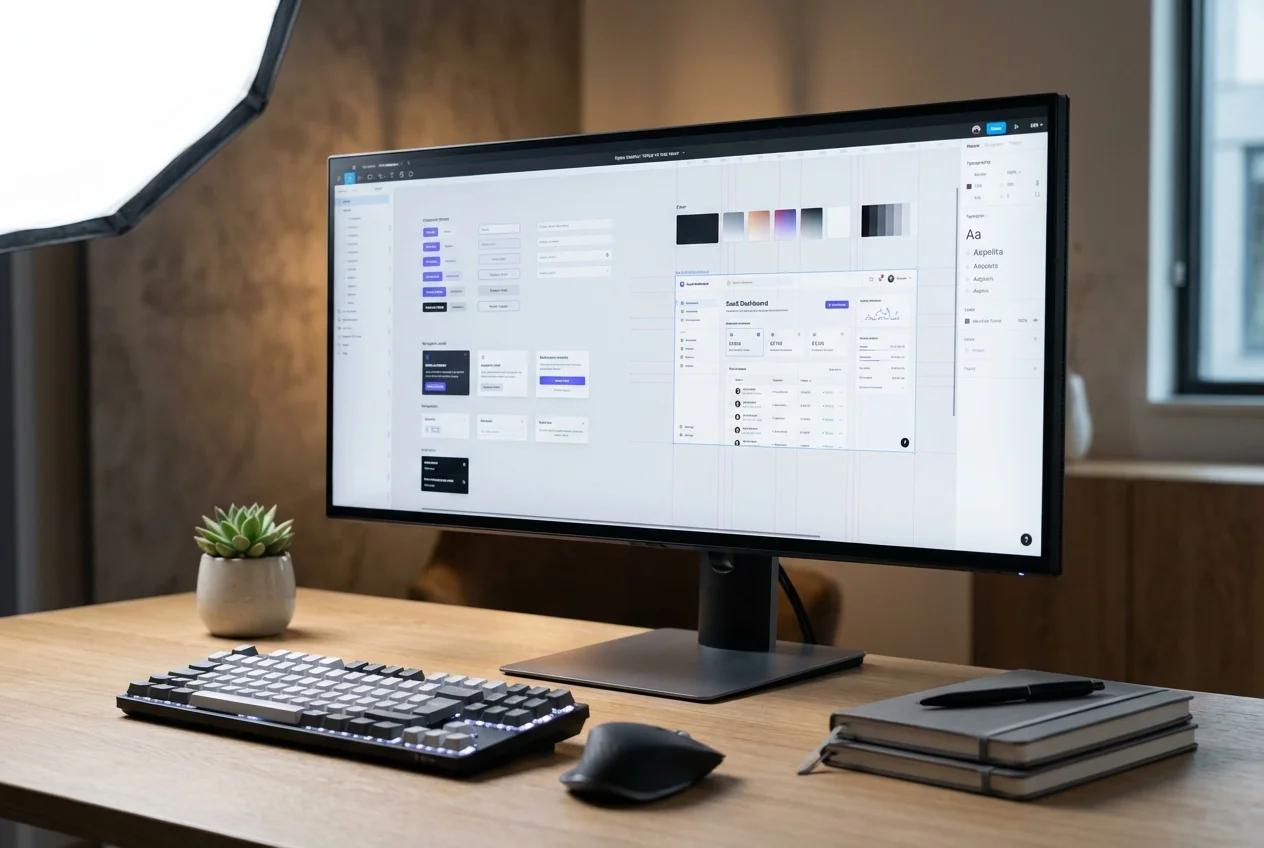 UI Design