UX Testing & Usability Testing Agency UK | B2B User Research

What Is a Usability Testing Agency and When Do You Need One?
A usability testing agency plans, recruits for, runs and analyses structured tests in which real users attempt tasks on your product while trained researchers observe. The output is not opinion or heuristic analysis — it is direct evidence of where users struggle, why they struggle, and which design changes will remove the friction. For UK B2B teams, the decision to hire a usability testing agency rather than run testing in-house typically comes at one of three moments: before a major redesign (to baseline the current state and de-risk the new one), after a significant conversion drop (to diagnose the cause without guessing), or during a product launch (to validate with target users before engineering commits the final build).
The difference between running usability testing yourself and hiring a specialist usability testing agency UK is in the quality of insight. Trained researchers know which observations signal genuine usability problems and which signal user novelty. They know how to probe without leading. They know how to synthesise findings across six participants into a prioritised fix list that a PM can take to sprint planning the following day. Self-run testing by product teams tends to confirm existing beliefs; expert-run testing surfaces the surprises that move the numbers.
What Good Usability Testing Looks Like for B2B Products
B2B usability testing differs from consumer testing in two important ways. First, the user base is smaller and harder to recruit. You cannot intercept B2B users on the street; you need to recruit through professional networks, panels, or your own customer base with the right screening criteria. An experienced usability testing agency UK has established recruitment pipelines for professional user segments: procurement managers, financial controllers, software engineers, legal operations teams, and other B2B roles that are expensive to reach without existing infrastructure.
Second, B2B task flows are longer, more contextual and more dependent on domain knowledge than consumer flows. A moderated usability test for a consumer e-commerce checkout might take 45 minutes. A moderated test for a complex enterprise workflow tool might take 90 minutes and require a test script that accounts for users' varying familiarity with the domain. Getting this right requires a researcher who understands how to adapt the methodology to the product's complexity — not a generalist running the same script for every engagement.
Methods a Specialist Usability Testing Agency Uses
The best usability testing agencies in the UK deploy a range of methods depending on what question needs answering:
- Moderated remote testing: Screen-shared sessions with a senior researcher. Best for validated, post-launch products with ambiguous performance problems — surfaces the specific interaction failures causing the drop.
- Unmoderated task testing: Via platforms like Maze or UserTesting. Provides fast, lower-cost signal from 20–50 representative users without researcher scheduling overhead. Best for pre-launch validation of new flows.
- Lab-based moderated testing: With assistive technology for accessibility compliance and edge-case discovery. Adds a rigour layer remote testing cannot replicate.
- Contextual inquiry: Researchers observe users in their actual working environment — essential for enterprise tools where the real usage context differs sharply from a test lab.
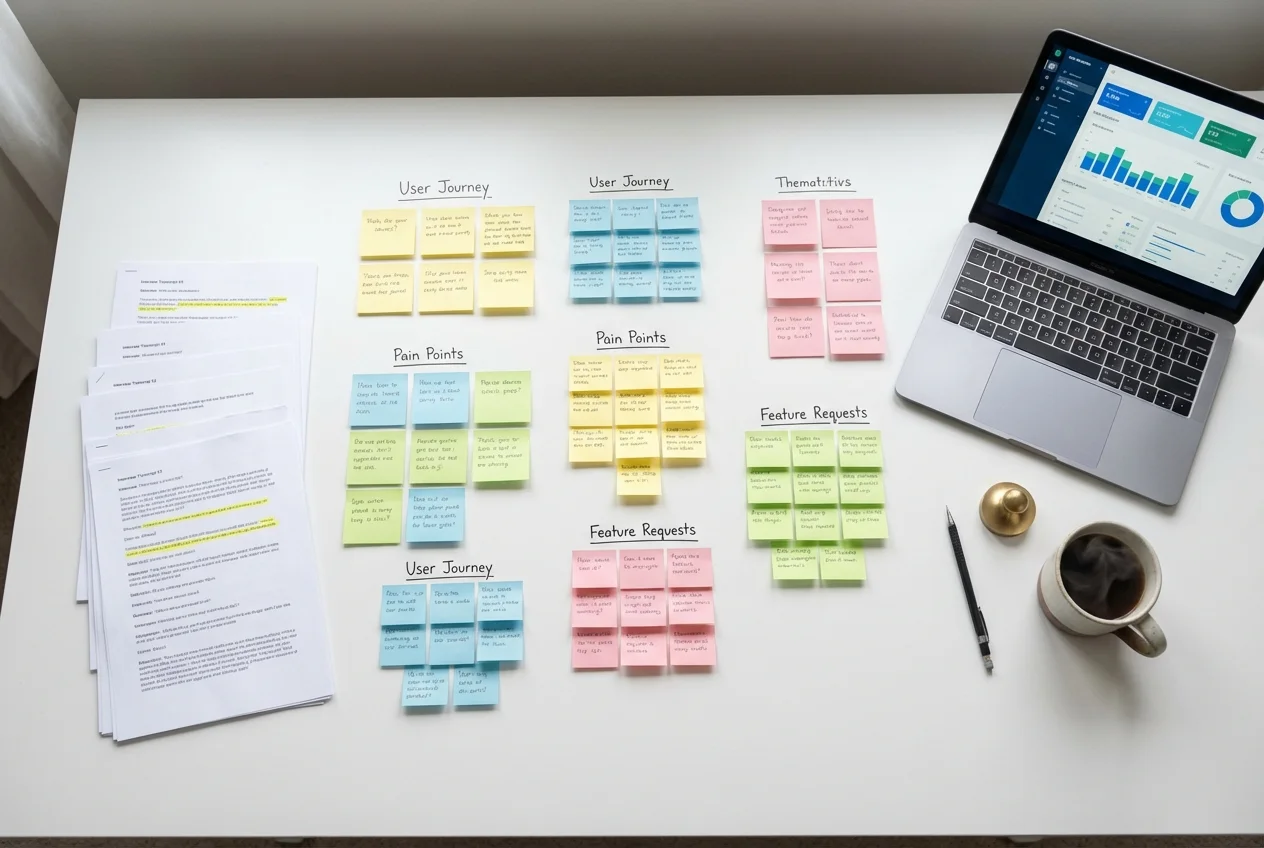
Our UX research practice, anchored in the UX research service, selects the right method for each question rather than defaulting to a single approach. The practical result: faster time to insight, and recommendations calibrated to what the evidence actually supports.
Usability Testing Agency vs In-House Research: The Trade-Off
In-house research teams have one structural advantage: domain knowledge. A researcher who has worked on a product for two years understands the regulatory context, user vocabulary and organisational dynamics that shape how findings translate to product decisions. An external usability testing agency starts without that context. The counter-argument: external researchers are not subject to the institutional blindspots that accumulate in any team working closely with the same product over time.
The most common failure mode in in-house usability testing is confirmation bias — researchers who know what the product team believes end up designing tests that confirm it. An independent usability testing agency UK brings a fresh perspective that is especially valuable for problems that have resisted internal diagnosis. The pragmatic model for most UK B2B teams is hybrid: in-house researchers handle ongoing sprint-cadence testing; an external agency handles major benchmarking studies and redesign-validation research.
What to Expect From a Usability Testing Engagement
A well-scoped usability testing engagement with a specialist UK agency runs in four phases. First, a research brief — what question are we answering, what are the hypotheses, who are the target users, and what does success look like? Second, participant recruitment and screener design — ensuring the people tested match the real user population in job function, experience level and product context. Third, moderated or unmoderated test sessions, typically five to eight for a focused study or twenty-plus for a large-scale benchmark. Fourth, a synthesis report with severity-ranked findings, supporting video clips, and a recommended fix list prioritised by user impact and engineering effort.
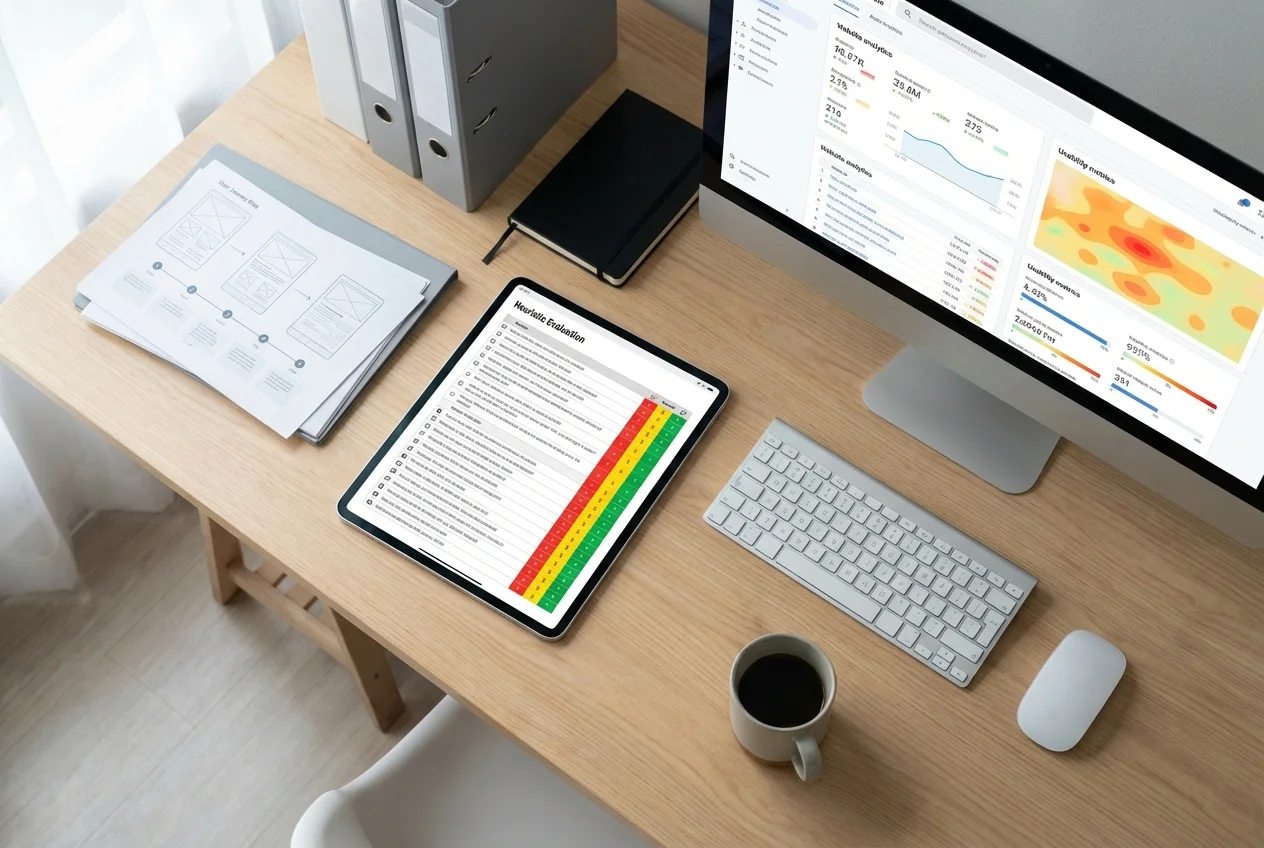
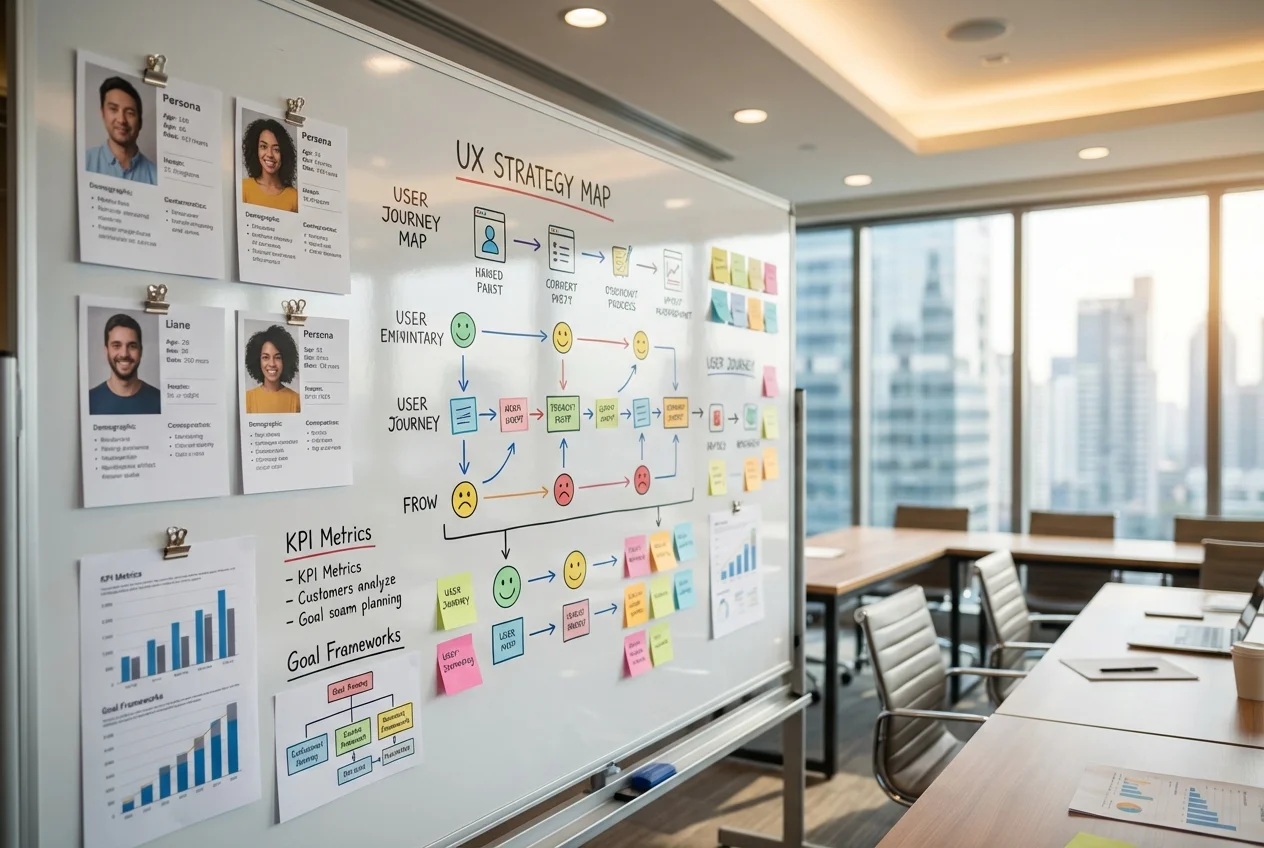
For clients running a broader UX programme, usability testing connects naturally to our UX audit service (which diagnoses design issues through expert review and analytics) and our UX strategy service (which turns research findings into a commercial roadmap). Read how a combined research-plus-strategy engagement improves B2B conversion in our interaction design and B2B conversion guide.
How Usability Testing Drives B2B Conversion
The connection between usability testing and revenue is more direct than most B2B product teams recognise. Every usability problem that survives into production is a conversion leak. A user who cannot complete a key workflow does not convert, does not renew, and does not expand their seat count. A user who can complete the workflow but finds it effortful churns at a higher rate than a user who finds it fluid. The ROI calculation on usability testing is straightforward: what is the revenue impact of a 10% improvement in activation, a 5% improvement in retention, or a 15% improvement in expansion? In most B2B SaaS models, those numbers dwarf the cost of a research engagement by an order of magnitude.
Our conversion-focused approach to usability testing is documented in our ROI of good UX design guide. For a broader view of how to evaluate UX agencies in the UK, our best UX design agency UK guide sets the market context.
Choosing a Usability Testing Agency in the UK: Questions to Ask
Before engaging any usability testing agency, ask five questions: What is your recruitment methodology for B2B professional users — can you show me a screener from a past engagement? How do you ensure research findings are actionable for a sprint team rather than just observational? Can you share a synthesis report format so I can see how findings are prioritised? What is your policy on researcher bias and how do you train against leading questions in moderated sessions? And: what commercial outcome did the last comparable usability testing engagement produce? An agency that answers all five concretely is ready for serious B2B work.
Frequently Asked Questions
What does a UX testing agency actually deliver at the end of an engagement?
A specialist UX testing agency delivers a synthesis report with severity-ranked findings, video clips of key moments, and a prioritised fix list — not just raw session recordings. The output is built so a PM can take it straight into sprint planning without further interpretation.
How is a usability testing agency different from a general user testing agency service?
Many user testing agency services simply recruit participants and hand over recordings. A specialist usability testing agency goes further: senior researchers design the test script, moderate sessions, and translate raw observations into commercially prioritised recommendations tied to conversion, activation or retention.
Can a usability testing agency work alongside our existing product team?
Yes — the most effective model pairs an in-house team's domain knowledge with an external usability testing agency's independent perspective and dedicated research bandwidth for major benchmarking or redesign-validation studies, without disrupting day-to-day sprint work.
If you are planning a usability testing engagement for a UK B2B product, book a free design audit consultation with one of our senior UX researchers. We will tell you which methodology fits your question best, what realistic timeline and investment looks like, and whether your product's current state suggests a research-first or redesign-first approach.
 UX Research
 UX Audit
 UX Strategy