SaaS UX Design Agency UK | B2B Product Design
What Is a SaaS UX Design Agency and Why Does It Matter for B2B Products?
A SaaS UX design agency specialises in designing digital experiences for software-as-a-service products — the dashboards, onboarding flows, feature interfaces, and customer-facing portals that drive activation, retention, and expansion revenue. For B2B SaaS teams, the difference between a specialist SaaS UX design agency and a generalist design studio is the difference between a design partner who understands ARR and churn economics and one who measures success by visual approval in a review meeting.
SaaS products have design requirements that are structurally different from other digital products. Users are not casual browsers — they are professionals with specific job functions who return to the product every working day. Onboarding must deliver a first value moment within minutes, not sessions. Feature discovery must balance depth with cognitive load. Permission systems must reflect organisational hierarchies without creating UX dead-ends. A UX design agency for SaaS that understands these constraints produces designs that move SaaS metrics directly — activation, product-qualified leads, seat expansion, and net revenue retention.
SaaS UX Design: The Metrics That Actually Matter
Too many SaaS teams measure design success by visual quality scores or stakeholder satisfaction. The metrics that predict commercial outcomes are different, and a specialist SaaS UX design agency UK frames every design decision against them:
- Time-to-Value (TTV): How long does it take a new user to complete their first meaningful action — the moment that converts a trial user to an activated user? Reducing TTV is the highest-leverage UX improvement for most SaaS products. Every additional minute in onboarding before the first value moment is a percentage point of activation rate lost.
- Feature Adoption Rate: What percentage of activated users engage with each core feature within the first 30 days? Low feature adoption is almost always a UX problem — not a feature problem. The feature exists, but users cannot find it, do not understand its value from the interface, or encounter friction that prevents first use.
- Support Ticket Volume by Feature: Support tickets are a proxy usability metric. High ticket volume on a specific workflow is diagnostic evidence of a UX failure. A rigorous SaaS UX design agency treats your support ticket themes as a research dataset, not just a customer success problem.
- Session Depth and Workflow Completion: Are users completing the workflows they started, or abandoning at predictable points? Funnel analytics combined with session recording reveal precisely where UX friction converts engaged users into churned accounts.
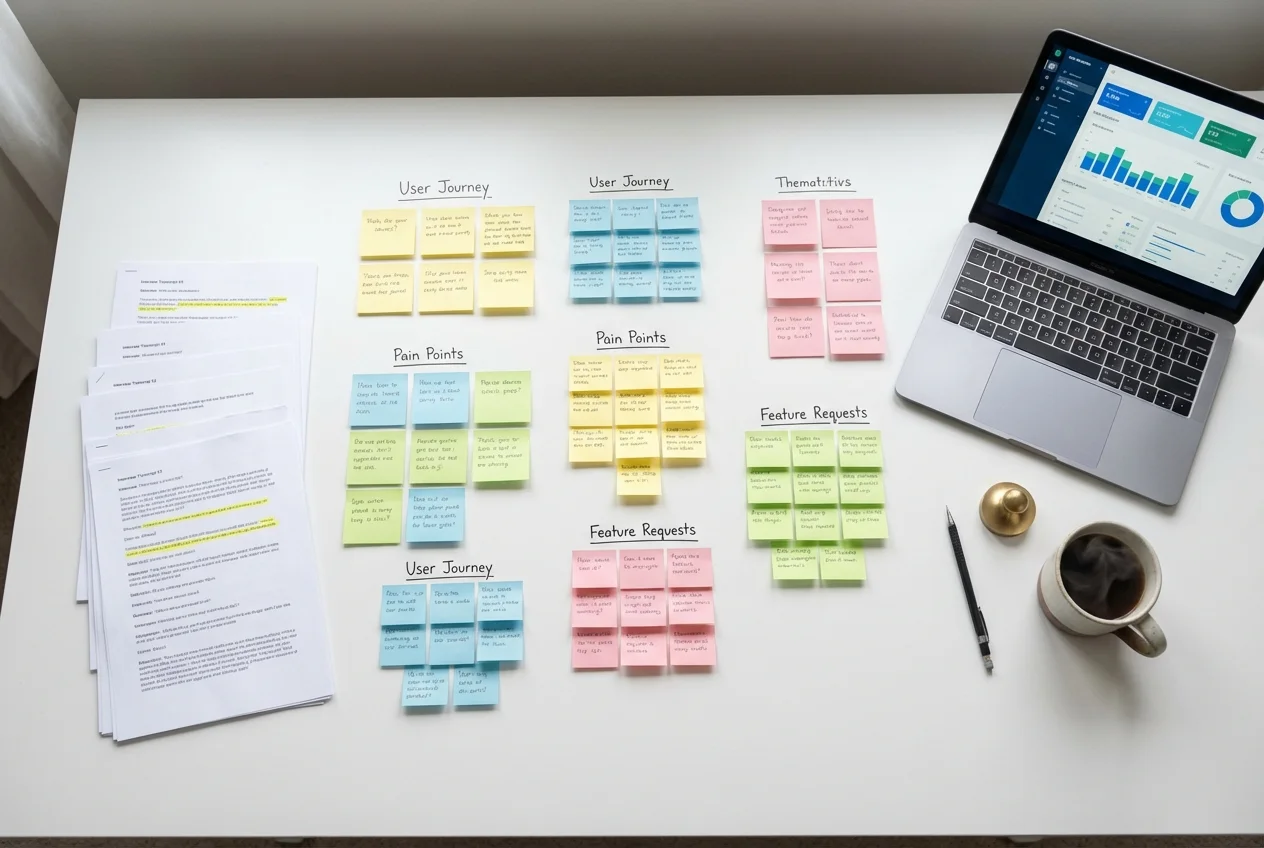
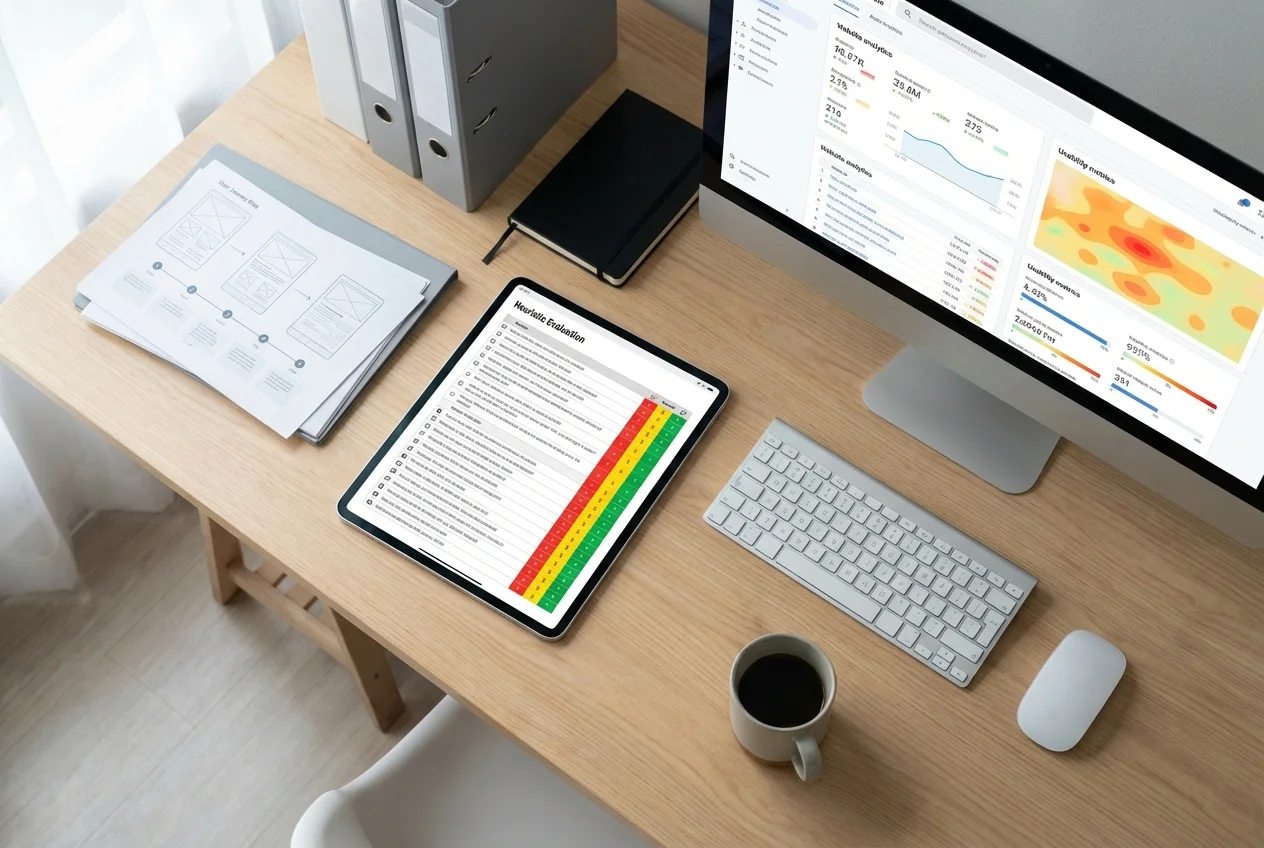
Our UX research service is built specifically to diagnose these metrics through moderated usability testing, funnel analysis, and heuristic evaluation — producing a prioritised fix list tied directly to the SaaS metrics above. Our UX audit service extends this into a comprehensive review of your entire product experience.
Five UX Design Patterns That Drive SaaS Retention
Research across SaaS products has identified a small set of interaction patterns that consistently drive retention. A specialist UX design agency for SaaS should apply these as defaults, not as optional enhancements:
Progressive disclosure in onboarding. Presenting every feature in an initial onboarding tour produces cognitive overload and zero retention of the information. Progressive onboarding reveals features in context, as users encounter the workflow where each feature is useful. The principle is simple: show users what they need, when they need it, in the place they need it. This pattern reliably reduces TTV and improves 30-day feature adoption across every SaaS category.
Persistent empty-state design. Empty states — what users see before they have added any data — are the most underinvested screen in SaaS products. A strong empty state explains what the feature does, shows what it will look like when populated, and provides a single, clear call-to-action. Weak empty states say "No data yet." The difference in activation from getting empty states right is measurable in days, not percentage points.
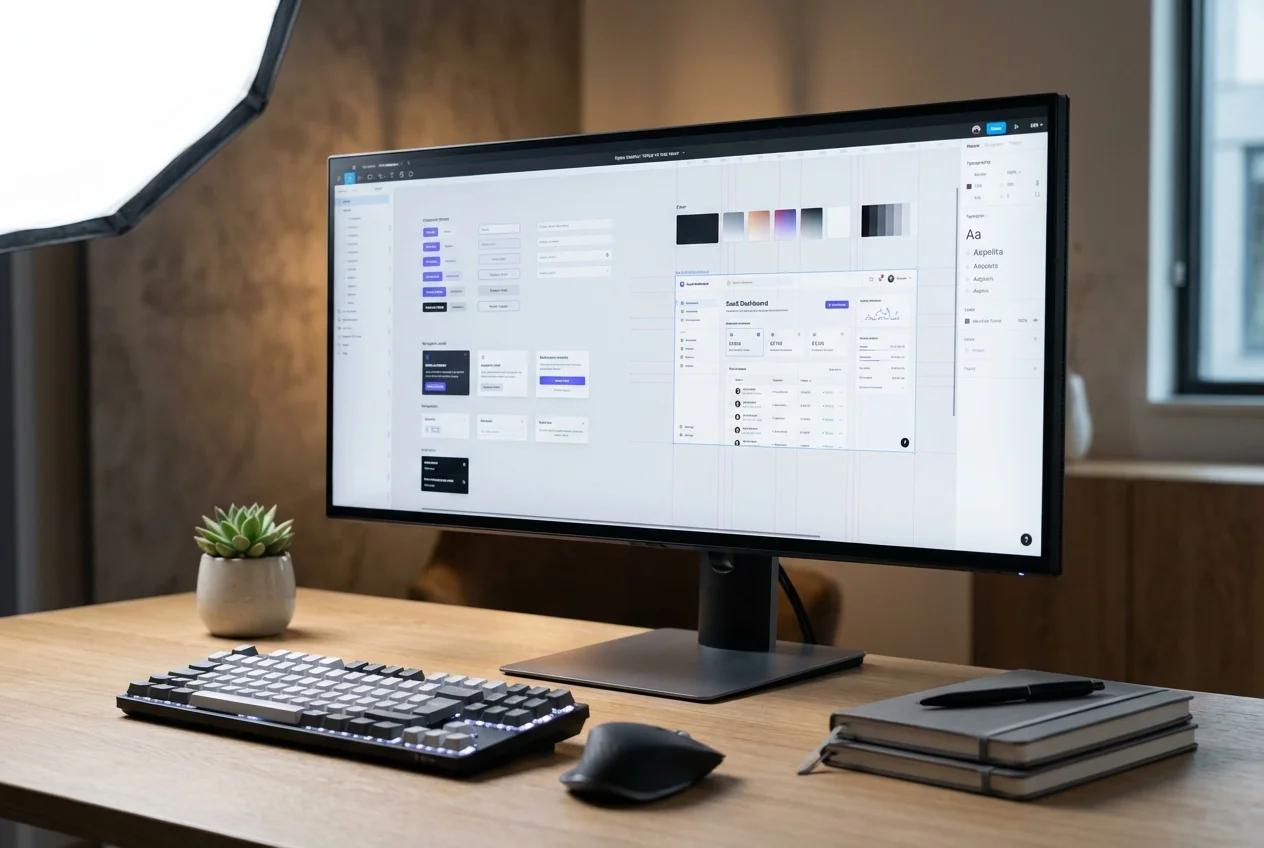
Role-aware navigation. B2B SaaS products serve multiple user roles — administrators, power users, read-only viewers, external collaborators — each with different workflows and permission levels. Navigation that presents equal visual weight to features the current user cannot access creates confusion and erodes trust. Role-aware navigation shows users only what is relevant to their context, reducing cognitive load and accelerating the path to first value. Our UI design service applies this pattern as standard on every B2B SaaS engagement.
In-context help that reduces support tickets. Contextual tooltips, inline documentation, and "what does this do?" interactions placed at the point of confusion reduce support volume and improve feature confidence. The placement and content of in-context help requires UX research to get right — you need to know where users are confused before you can place help where it matters.
Success confirmation and progress indicators. SaaS workflows often involve multi-step processes where users cannot tell whether their action was successful until several steps later. Clear progress indicators, step confirmation messages, and explicit success states reduce anxiety, prevent duplicate actions, and increase the likelihood of workflow completion. For a deep dive into how interaction design drives SaaS conversion, read our interaction design and B2B SaaS conversion guide.
Research-Led SaaS UX: Why Evidence Beats Assumption
The most common failure mode in SaaS UX design is designing to internal assumptions. Product teams live so close to their product that they can no longer see it the way new users do. The onboarding flow that took six months to build feels obvious to the team that built it, and invisible in its confusion to the users who encounter it for the first time.
A research-led SaaS UX design agency UK breaks this pattern by systematically testing with real users before committing design decisions to engineering. The investment in five moderated usability sessions — roughly one week of research work — consistently surfaces three to five critical interaction failures that would have cost significantly more to fix post-launch. The ROI is straightforward: an unresearched design that ships with a broken onboarding flow costs more in churned trials than the research programme that would have caught it. Our approach to SaaS research is detailed in our UX research agency UK guide.
For B2B SaaS teams considering their first engagement with a design agency, the most important research question to answer before any screen is designed is: where, specifically, are users failing to reach their first value moment? Everything else is downstream of this. If you know the answer from your own analytics, share it in your first brief. If you do not know the answer, the research engagement is the right starting point.
Choosing a SaaS UX Design Agency UK: What to Look For
When evaluating UK UX design agencies for a SaaS product, the evaluation criteria differ from those for a marketing site or branding engagement. The questions that matter:
Do their case studies show SaaS-specific metrics? Activation rate improvement, TTV reduction, support ticket reduction, feature adoption increase — these are the outputs of good SaaS UX design. An agency that presents only visual portfolio images cannot demonstrate commercial impact. Ask specifically: which SaaS metrics moved as a result of your design work, and by how much?
Do they research before designing? Any agency working on a SaaS product without user research data is designing to internal assumptions. For SaaS products with even 50 active users, the cost of five moderated usability sessions is a fraction of the cost of designing the wrong solution. An agency that skips or minimises research is optimising for project speed, not product outcomes. Our guide to choosing a UK UI UX design agency covers the research question in detail.
Is the engagement team senior? SaaS product design requires practitioners who understand SaaS business models, not just interface design. The designer who presents in the pitch meeting should be the designer on the project. Ask who specifically will be working on your engagement, their relevant SaaS portfolio, and their methodology for research and design system production.
For a broader evaluation framework, our best UX design agency UK buyers guide covers the full selection methodology. Ready to discuss a SaaS UX design engagement? Book a free 30-minute consultation and we will review your current SaaS product, identify the highest-impact design improvements, and outline a research-led engagement that moves your metrics.
 UX Research
 UX Audit
 UI Design